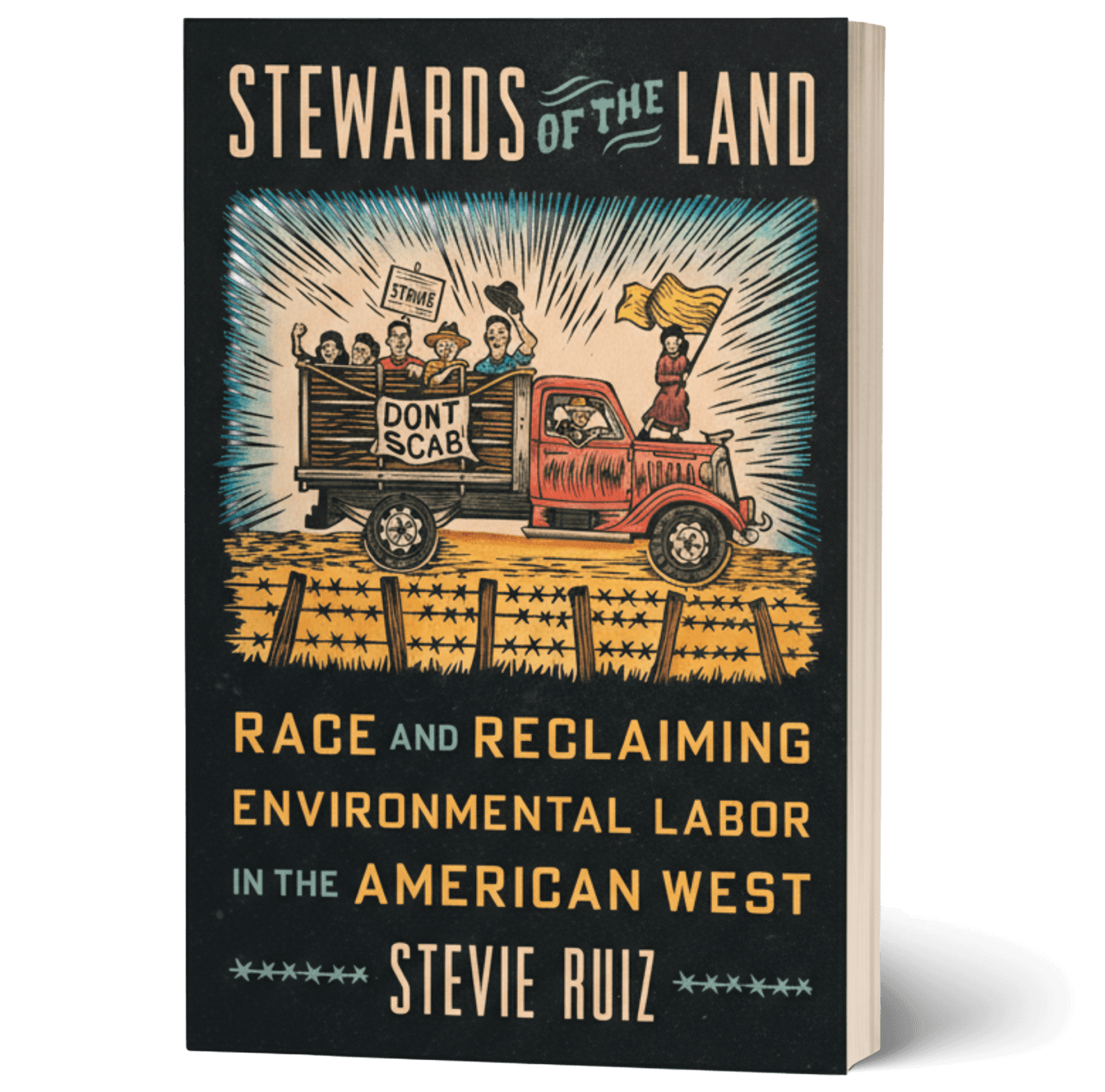
Stewards of the Land
The American environmental movement has a labor problem. For nearly a century, immigrant workers — Chinese laborers, Mexican American trail crews, Japanese American detainees, migrant stewards — built, shaped, and maintained the landscapes we now call public. Their hands laid the stone paths in national parks. Their knowledge informed land management practices still in use today. And yet, their contributions have been largely absent from the history books.
In Stewards of the Land, I trace the role of immigrant communities in the environmental movement — drawing on archival research and institutional records to recover stories that have been systematically overlooked. From the Asian migrants who helped build the national parks to the Chicana/o communities who shaped land stewardship across California and the American West, this book reveals that environmentalism has always been a multiracial endeavor.
Find the book wherever you buy or borrow.
What The Book Covers
Building
the Parks
Asian migrants played a foundational role in constructing the roads, walls, and infrastructure of America's early national parks. Their work made these landscapes accessible to the public — and their presence was systematically erased from the record.
California Agriculture
& Land Dispossession
The story of who could access, own, and work California's land is inseparable from the story of immigration. From exclusionary land laws to exploitative agricultural labor, this thread examines how land policy and labor intersected across California's environmental history — and who paid the price.
Confinement
& Resistance
During World War II, Japanese Americans maintained environmental labor and land stewardship even within the confines of concentration camps. Their story is a powerful thread in this book — a testament to the deep connection between immigrant communities and the land, even under the most unjust conditions.
Labor as
Environmentalism
The environmental movement has traditionally been told as a story of preservation and advocacy. This book argues that the physical labor of building and maintaining public land is itself an environmental act. Environmentalism has always been a multiracial endeavor — and the workers who made it possible deserve recognition as part of the movement.
Trails &
Stewardship
Chicana/o communities and Mexican American workers did far more than build trails. They shaped land stewardship practices, managed resources, and brought knowledge of the land that influenced how public spaces were maintained for decades — including through the Civilian Conservation Corps during the Great Depression.